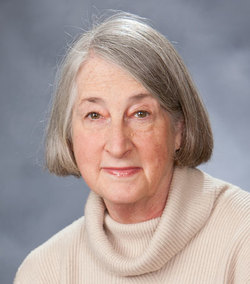
September 17, 2010:
Vocal Ornamentation and Its Many Meanings

Guest Speaker
Cindy Kim
PhD Candidate in Musicology
Eastman School of Music, University of Rochester

Location: Humanities 1641


Performance practice scholars have long argued that vocal ornamentation continued as a vital part of Italian opera performance throughout the nineteenth century; yet, modern histories of opera have often dismissed this vibrant tradition, focusing on compositional style as the sole parameter for charting the development of the genre during this period. This approach has resulted in inconsistencies between the histories of performance practice and of compositions, and a misunderstanding of vocal embellishment as an outdated convention, serving only the singer’s propensity for virtuosic display.

In this paper, I argue for a reconsideration of ornamentation and its place in nineteenth-century opera composition, reception, and concert life. Taking Vincenzo Bellini’s La sonnambula (1831) and the embellishments for the heroine Amina as a case study, I claim that singers’ ornamentation could steer the dramatic trajectory of a character, the meaning of an opera, and even the direction of future compositions. As the case study will show, charting the influence of this unwritten tradition on written musical works sheds new light not only on ornamentation but also on opera, a genre characterized by its fluidity from one performance to another.

October 1, 2010:
Jewish Music, Handel, and the Berlin Jewish Culture League

Guest Speaker
Lily E. Hirsch
Assistant Professor of Music History
Cleveland State University

Location: Humanities 1641


The Berlin Jüdischer Kulturbund, or Jewish Culture League, was a closed cultural organization created by German Jewish luminaries in cooperation with the Nazi government. This presentation examines the organization's debate on "Jewish music" and its culmination, represented by the Jewish Culture League Conference in 1936. To further access this debate in practice, the presentation specifically focuses on Handel's popularity in League performance. However, Handel's standing in the League's repertoire may further confound, rather than clarify, this inquiry. After all, Handel, of German origins, was quite popular in the League in part because of his music considered Jewish. Despite or maybe because of contradictions like this one, this paper is able to shed light on the complicated process of defining "Jewish music" in Nazi Germany. It also offers a glimpse into the internal operation of this unique organization, a product of collaboration between Jews and Nazis, and, for many, a place of both salvation and damnation.

October 15, 2010:
"Pure Radio" versus "Photography in Sound:" Experimenting with Radio's Potential in the late 1930s


UW-Madison Faculty
Michele Hilmes (profile)
Professor of Communication Arts

Location: Humanities 1641

The debate over radio's capacity to create its own unique universe of expression, on the one hand, versus its ability to capture and transmit reality, on the other, goes back as far as its very first theorist, Rudolph Arnheim. In the United States and Great Britain, techniques of live studio production had risen to a height by the late 1930s, using music, voice, and sound effects to create a kind of program celebrated as "pure radio," inimitable by any other medium. Yet a counterforce, linked to slowly developing technologies of recording, sought to capture the voices and songs of working class people in an atmosphere of democracy in crisis. Add a transatlantic element — many of these experiments involved both British and American producers, working in tandem — and the scene was set for a short-lived period of unique experiments in sound that involved writers, composers, and musicians such as Arthur Miller, Archibald MacLeish, Norman Corwin, Benjamin Britten, Bernard Herrmann, Alan Lomax, and Dylan Thomas, as well as newsmen and documentarists such as John Grierson, Pare Lorentz, and Edward R. Murrow.

October 29, 2010:
SEM/AMS Conference Preview

UW-Madison Faculty
Pamela Potter (profile)
Professor of Musicology

UW-Madison Students
Rachel Goc
MA Student in Ethnomusicology

November 19, 2010:
The Mise-en-scene of Mediation: Wagner's Götterdämmerung (Stuttgart Opera, Peter Konwitschny, 2002-2003)

Guest Speaker
David Levin
Associate Professor of Germanic Studies
University of Chicago

Location: 2650 Humanities

This talk examines the stakes of theatricality in Peter Konwitschny's strikingly unconventional production of Wagner's Götterdämmerung, which concluded the Stuttgart Opera's strikingly unconventional centennial production of the Ring cycle. The Konwitschny production sets out from a scene that is jarringly, jaw-droppingly anachronistic, and it concludes with an equally surprising, but much more familiar account of scenic erasure. As it turns out, opera and theatricality prove especially helpful in making sense of Konwitschny's production, which maps the tragedy of Wagner's tetralogy onto a scenic landscape beyond opera.